

The International Middle Years Curriculum (IMYC) is designed to provide junior secondary students with a holistic, contextual, and challenging learning experience. Within IMYC, there is a cycle that must be implemented by both teachers and students in each term (three months), consisting of the Entry Point, Knowledge Harvest, Subject Learning Activities, Overarching Reflection, and Exit Point.
One of the most important components in the implementation of IMYC is the entry point. The entry point is an opening activity aimed at stimulating curiosity, motivation, and active student engagement with the big unit to be studied. Through the entry point, learning does not begin with theory, but with real-life experiences that are relevant to student's lives.
At the junior secondary level, entry point activities are designed differently at each grade to suit student's developmental stages.
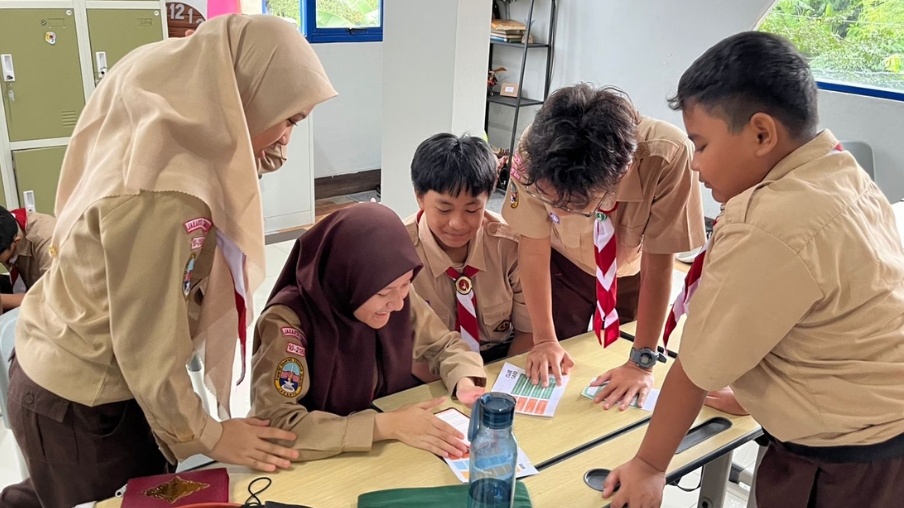
In Grade 7, students are at the early stage of adolescence, a phase that requires many collaborative experiences and the development of responsibility. Therefore, the big unit Collaboration is introduced through an engaging and challenging entry point activity in the form of a scavenger hunt.
In this activity, students are divided into several groups. Each group receives a series of clues that must be solved collaboratively to find specific locations around the school environment. After successfully finding the designated location, they receive a QR code from the teacher. They then return to their respective classrooms to scan the QR code and collaboratively answer questions in a Google Form.
The questions cover several subjects that will be studied throughout the cycle of the Collaboration big unit, including Science, English Language, Social Studies, and Physical Education. Correct answers earn points that are accumulated by each group.
Through this activity, students learn that success cannot be achieved individually. They are trained to communicate, share roles, listen to others’ opinions, and take responsibility for group tasks. The scavenger hunt not only develops critical thinking skills but also instills values of teamwork and a sense of belonging within the group.
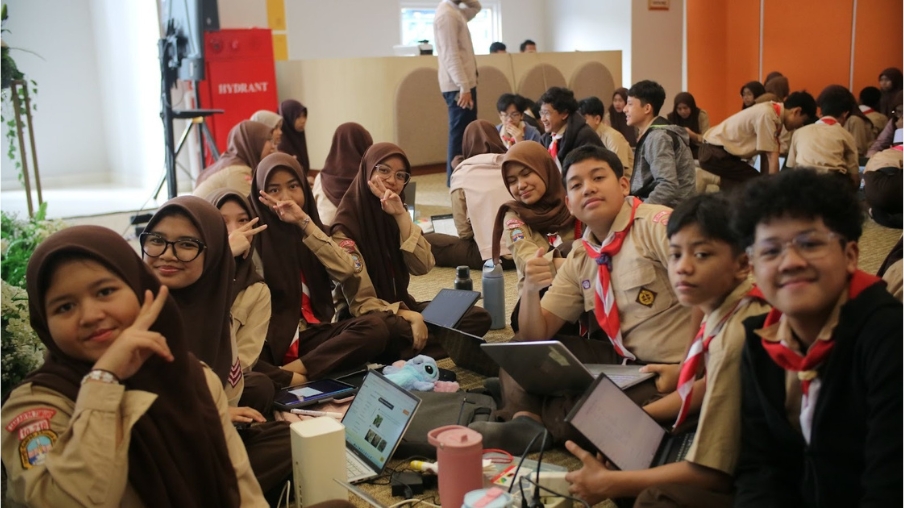
As students enter Grade 8, they begin to demonstrate more reflective and creative thinking skills. At this level, the big unit Tradition is introduced to foster appreciation for culture and local wisdom through literacy-based and creative project approaches.
The Grade 8 entry point focuses on designing a magazine framework. Students are invited to create a magazine concept that integrates various IMYC subjects and projects they will study, namely English Language, Science, Arts, Social Studies, ICT, Physical Education, and Business Studies. The activity begins with determining sections, writing themes, and visual ideas, all of which are designed by students in a structured manner.
The entire magazine planning process is guided by Grade 9 students, who already have experience in producing an engaging and highly informative magazine.
In addition, students work on a traditional recipe book design project. Through this activity, they not only learn about a variety of traditional cuisines, but also understand the cultural values, stories behind the dishes, and the importance of preserving traditions through creative documentation.
This entry point encourages students to see tradition not as something outdated, but as a cultural identity that can be presented in a modern and appealing way. Creativity, collaboration, and communication skills are the main competencies developed through these activities.
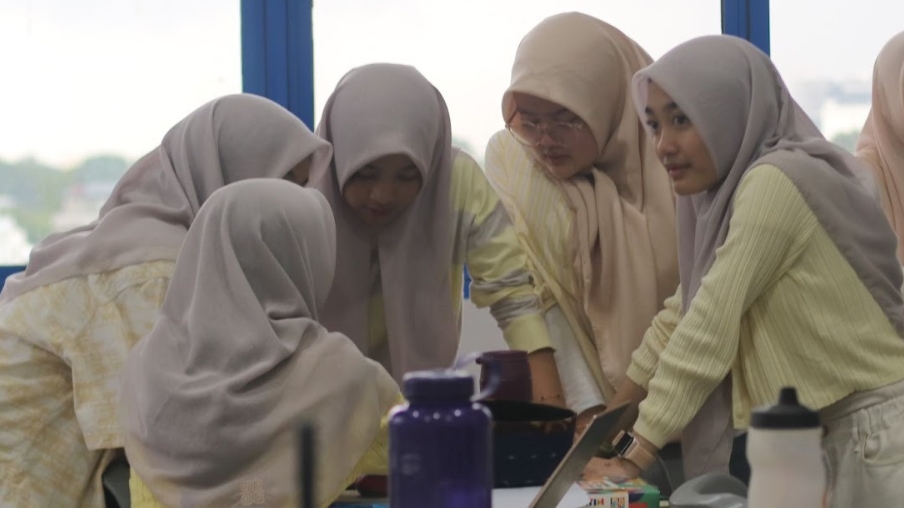
In Grade 9, students are in a transition phase toward the next level of education. Therefore, the big unit Challenge is designed to strengthen a growth mindset and readiness to face both academic and non-academic challenges.
The entry point begins with a study session led by teachers from an external tutoring institution. This session aims to equip students with effective learning strategies, time management skills, and motivation to face future challenges. The activity also serves as preparation for the Academic Ability Test (TKA) organized by the government.
Afterwards, the activity continues with a challenging treasure hunt. Students must follow clues provided by the teacher to find specific locations. At each location, they discover hidden questions that must be answered correctly. Each correct answer becomes the key to obtaining the next clue until all challenges are completed.
Through this series of activities, students learn about perseverance, focus, collaboration, and the courage to face challenges. The treasure hunt symbolizes that every major goal requires a process, strategic thinking, and sustained effort.